

👑 From Town Hall to Throne: Unlocking the Secrets of the Royal Palace Amsterdam
Standing proudly on Dam Square, the Royal Palace Amsterdam (Koninklijk Paleis van Amsterdam) is one of the city’s most iconic landmarks. However, its stately façade and royal title tell only half the story. This magnificent building holds a fascinating secret: it was not originally built for a king, but for the citizens of the world’s wealthiest city in the 17th century.
A visit here is a journey through a dramatic architectural and political transformation, offering a window into the Dutch Golden Age and the unexpected rise of a monarchy.
🏛️ A Masterpiece of the Golden Age: The Citizen’s Palace
The palace’s story begins in 1648, an era when Amsterdam was at the pinnacle of its power as a global trade hub. Designed by architect Jacob van Campen in the austere yet grand style of Dutch Classicism, the building was intended to be the Stadhuis (City Hall)—a monument that would perfectly encapsulate the city’s wealth, judicial authority, and civic pride.
At the time, it was the largest secular building in all of Europe. Its sheer size and opulence were meant to send a clear message: Amsterdam was the center of the universe.
The true heart of this civic pride is the stunning Burgerzaal (Citizens’ Hall). This colossal marble-clad room features:
- Marble Floors: Two massive inlaid marble maps depicting the Western and Eastern Hemispheres, with a celestial chart nearby, symbolizing Amsterdam’s dominance in global trade and navigation.
- Symbolic Art: Sculptures and reliefs throughout the building’s interior glorify good governance, justice, and the sea, reflecting the city’s main pillars of power.
🇫🇷 A Royal Coup: The Transformation into a Palace
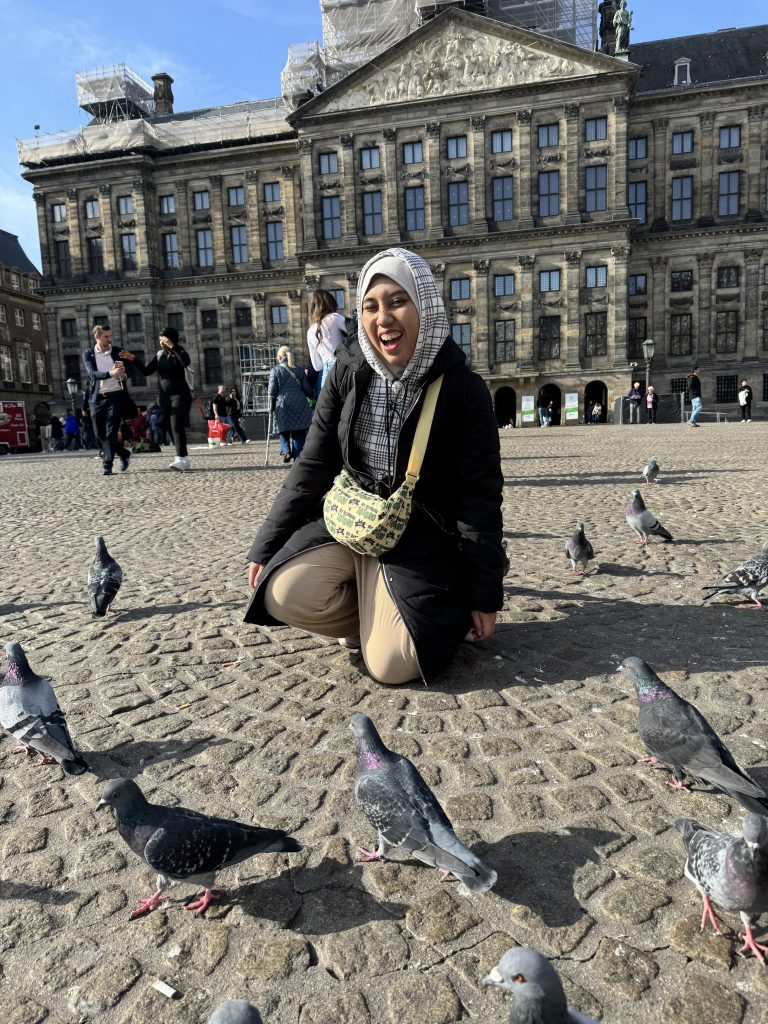
The building served as the seat of the Amsterdam government for a century and a half until a fateful turn of history in the early 1800s. In 1808, King Louis Napoleon, brother of Emperor Napoleon Bonaparte, decided he needed a fitting residence in the capital. He unceremoniously evicted the city council and had the Town Hall converted into his Royal Palace.
Louis Napoleon’s brief reign left a lasting mark:
- Empire Style: He introduced a lavish collection of Empire furniture, which is still present in the palace today and is considered one of the most beautiful collections of its kind outside of France.
- Imperial Decoration: The interiors were quickly redecorated to befit a monarch, adding a layer of French royal flair over the austere Dutch Classicism.
After the fall of Napoleon, the building was eventually given back to the newly established Dutch Royal House, securing its status as one of the monarch’s three official residences—used primarily for state visits, official receptions, and award ceremonies to this day.
🌟 Your Must-See Highlights Inside
When the palace is not in use by the Royal House, it opens its doors to the public, offering a fascinating tour through its history:
- The Burgerzaal (Citizens’ Hall): Stand on the famous marble world maps and soak in the room designed to feel like a walk across the entire known world.
- The Vierschaar (Tribunal): A smaller, marble-lined room where death sentences were once passed, decorated with dramatic sculptures alluding to justice and punishment.
- The Empire Furniture: Look for the exquisite French Empire-style furnishings, a direct legacy of King Louis Napoleon’s time.
The Royal Palace Amsterdam is a story etched in stone: a testament to the might of a republic that built a palace for its citizens, only to have it claimed by a king, and today, generously shared with the world.
Would you be interested in an article about the distinctive architecture of Dutch Classicism as seen in the Royal Palace Amsterdam?

